Infrastructure & Services
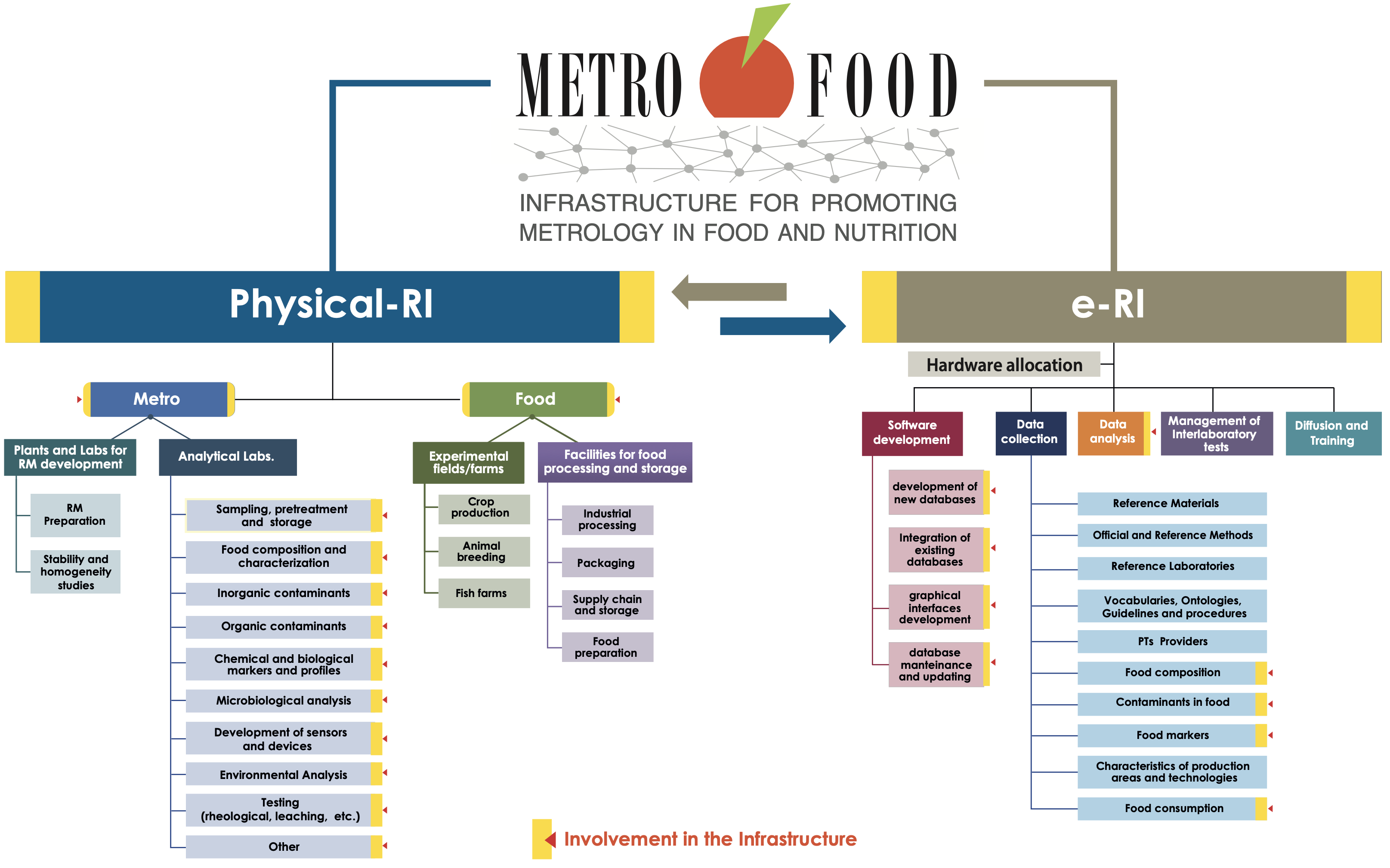
Analytical Labs
Materials
- Metals
- Ceramic materials and composites
- Plastic materials
- Other
Agroecosystem
- Surface and groundwater quality characterization
- Soils and sediments characterization
- Bio-availability studies
- Air pollution
- Wet & Dry depositions
- Bio-indicators
- Other
Authenticity Traceability
- Isotopes of light elements
- Isotopes of heavy elements
- Non target analysis
- Trace elements
- Sensory profiles
- Rare Earth Elements
- Elemental profiles
- Metabolic profiles
- Genetic markers
- Other
Nutrition
- Vitamins
- Carbohydrates
- Fatty acids
- Proteins and amino-acids
- Water
- Minerals
- Other
Food Quality
- Surface and groundwater quality characterization
- Soils and sediments characterization
- Bio-availability studies
- Air pollution
- Wet & Dry depositions
- Bio-indicators
- Other
Food Safety
- Vitamins
- Carbohydrates
- Fatty acids
- Proteins and amino-acids
- Water
- Minerals
- Other
Electronic Facilities
- Database / Data Calculation
- Calculation / Data processing
- Modeling / Data Integration
- E-learning platforms
- Other e-facilities
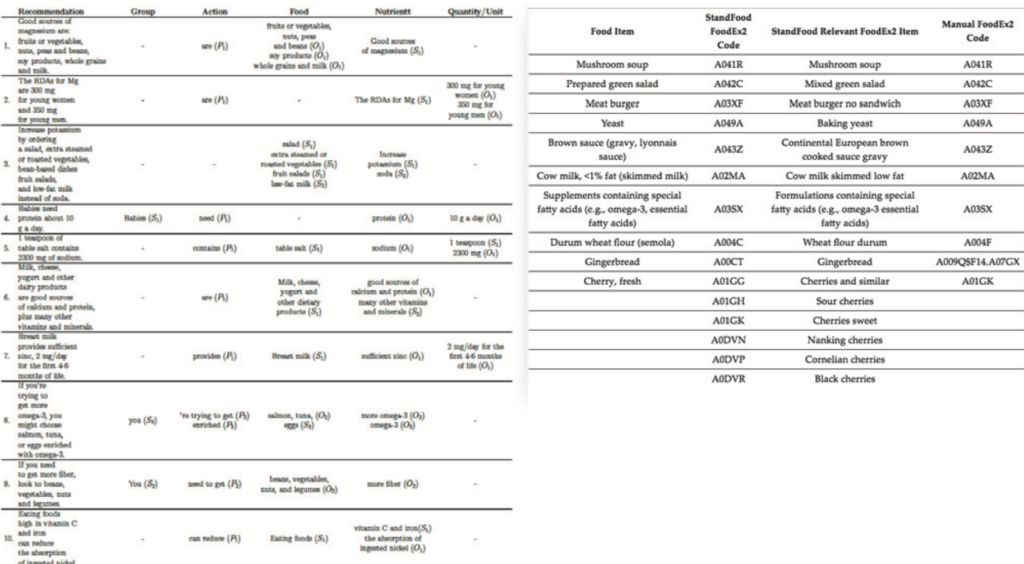
Food matching results
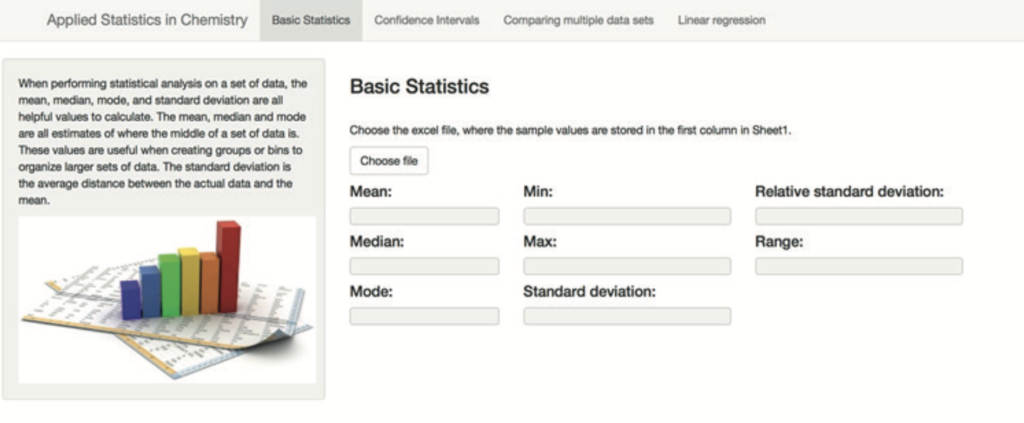
E-learning tool – basic statistics
Physical Facilites
Clean laboratories, lab safety procedures, biobank facilities, QA system with accredited laboratories and certified for handling biological materials.
The Department’s laboratories are well equipped for mass spectrometry analysis.
Instrumentation:
Mass spectrometry: UPLC-qTOF-MS/MS, ICP-MS, ICP-MS QQQ, LA-ICP-MS, LC-ICP-MS, GC-ICP-MS, SP-ICP-MS, GC(IT)MS, GC-MSD, LC-MS/MS;
Spectrophotometry: HG AFS, CV AFS, CV AFS , Raman spectroscopy;
Isotope ratio mass spectrometry: EA-IRMS, GC-C-IRMS, DI-IRMS, Py-IRMS, MC-ICP-MS;
Nuclear methods: TRIGA MARK II nuclear reactor, alpha, beta and gamma counting;
Access to JSI research infrastructure: Protein structures and Electron Microscopy Center with state of the art equipment.

Laboratory is equipped with LC-MS/MS (Infinity 1290, 6460, Agilent Technologies), which is mainly used for analyses of pesticide residues in fruit, vegetables and soil and precursors in grapes / wine, GC-MS /MS (8890, 7010B, Agilent Technologies), which is mainly used for analyses of pesticide residues in fruit, vegetables, honey, polen, dead bees, soil, water, wine, juice and jam and GC-MS (7890A– 5975C upgraded with triple axis detector, Agilent Technologies), which is mainly used for analyses of acaricides in honey.

The Department’s laboratories are well equipped for molecular biology, biochemical and microbiological analysis, plant growth and electron microscopy.
The equipment at NIB is part of Infrastructural Centre Planta.
Equipment relevant for the project is listed below:
real-time PCRs (ABI HT 7900HT Fast, Roche Light Cycler 480, ABI PRISM ViiA7 SDS); droplet digital PCRs (QX100 and QX200, Bio-Rad) chip based digital PCR (BioMark HD, Fluidigm) robotic liquid handling system used for automated pipetting of liquids (Microlab StarLet, Hamilton). IonTorrent sequencer, electron microscope (Philips CM100) confocalmacroscope(LeicaTCSLSI). Growthchambers, experimentalgreenhouses.
Unit for Food and Items of General Use is the part of the Department for the Environment and Health.
Activities are performed in cooperation with Department for Chemical Analysis of Food, Water and Other Environmental Samples and Department for Microbiological Analysis of Food, Water and Other Environmental Samples.
The unit perform sampling and analyses of food by accredited methods (pesticides, contaminants, alergene, nutritional value, microbiology…).
Laboratory is also NRL’s for residues of veterinary medicines, pesticide, mycotoxyne, dioxine, PCB, mercury.
We also perform internal control in accordance with the HACCP standards, education and training on food hygiene.
All results are evaluated about conformity according to the legislation, standards and/or other expert guidance documents. For some issues we perform the risk assessments especialy for contaminants in food.
Some parameters are analysed according to the problems of specific migration from food contact materials (FCMs) into packed food, NLZOH is also NRL for FCMs.
Unit for food cooperate with governmental bodies in the field of the monitoring of food compliance according to the food safety legislation as well as food labelling.
Laboratories of the Department (laboratories of the 5 Chairs participating in the program) are equipped with the most modern instruments.
Chair of Biochemistry and Food Chemistry (KBKŽ) carry out structural studies of macromolecules transitions (influence of additives on the transition) with DSC calorimetry, the rheological properties at the Chair of microbiology (using Anton Paar rheometer).
For analysis of fatty acids we are using GC-MS at the Chair of Technologies, the HPLC determination of the content of phenolic compounds is performed within 2 chairs, KBKŽ and KTPV.
Microbiological analyzes and analysis of antifungal properties at the Chair of Biotechnology and Food Safety and Microbiology.
The spray-dryer and micro-encapsulator (Buchi) are at KBKŽ Chair for encapsulation of biologically active compounds.
Facilities for analysis of meat products are at the Chair of Meat Technology and Food Assessment as well as for sensory analysis of the products.
Facilities at ULJ-VF enable testing of various samples including food and feed. Samples are prepared in specially designated areas for sample preparation.
Microbiological testing includes classical bacteriological testing (isolation and culturing of microbes), serological testing and various molecular methods using PCR, real-time PCR, digital PCR, pulse field gel-electrophoresis determination, Sanger sequencing and next generation sequencing.
Species determination is performed by molecular methods (PCR-analyses, sequencing).
Animal house facilities for biological assays are also available.
For chemical analysis of food and feed, the following equipment is used: ICP-MS, LC-MS/MS, UPLC-MS/MS, GC-MS/MS, some HPLC-DAD-FLD, MALDI-TOF, GC-MS; GC-FID, Kjeldahl system, Extraction (Soxlet) system, Foodscan

The researchers of the Institute for Oliveculture and laboratory staff have collaborated in the preparation, implementation and leadership of two strategically important projects for the cross-border area and the ZRS Koper – SIGMA and SIGMA2 – that enabled the construction of infrastructure for natural sciences focused in the Mediterranean agriculture, and founded the Mediterranean Culture Centre, which is important for the development of Mediterranean cultures and for the identity of the area.
Since March 2017, the Lab of the Institute for Oliveculture used the new laboratories infrastructure facilities and equipment in the Mediterranean Culture Centre in Isola, that includes LC/MS/MS (QQQ), GC-S/Sless-CoolOnC, HPLC (DAD/RID/FD), ISO 17025 and COI accredited sensorial panel as a part of accredited laboratory.
The Laboratory for Characterization and Processing of Polymers at the University of Maribor provides comprehensive testing and analysis of fibers, yarns, flat and technical textiles, films, foils and laminates, and composite materials for industrial and consumer applications. Our services include evaluation of physical and mechanical properties (tensile strength, elongation, abrasion, dimensional stability), physico-chemical properties (moisture absorption, UV resistance, permeability, thermal behavior), chemical composition analysis (fiber identification and additives), as well as failure and damage analysis. All testing is conducted in accordance with internationally recognized standards such as ISO, ASTM, and AATCC.